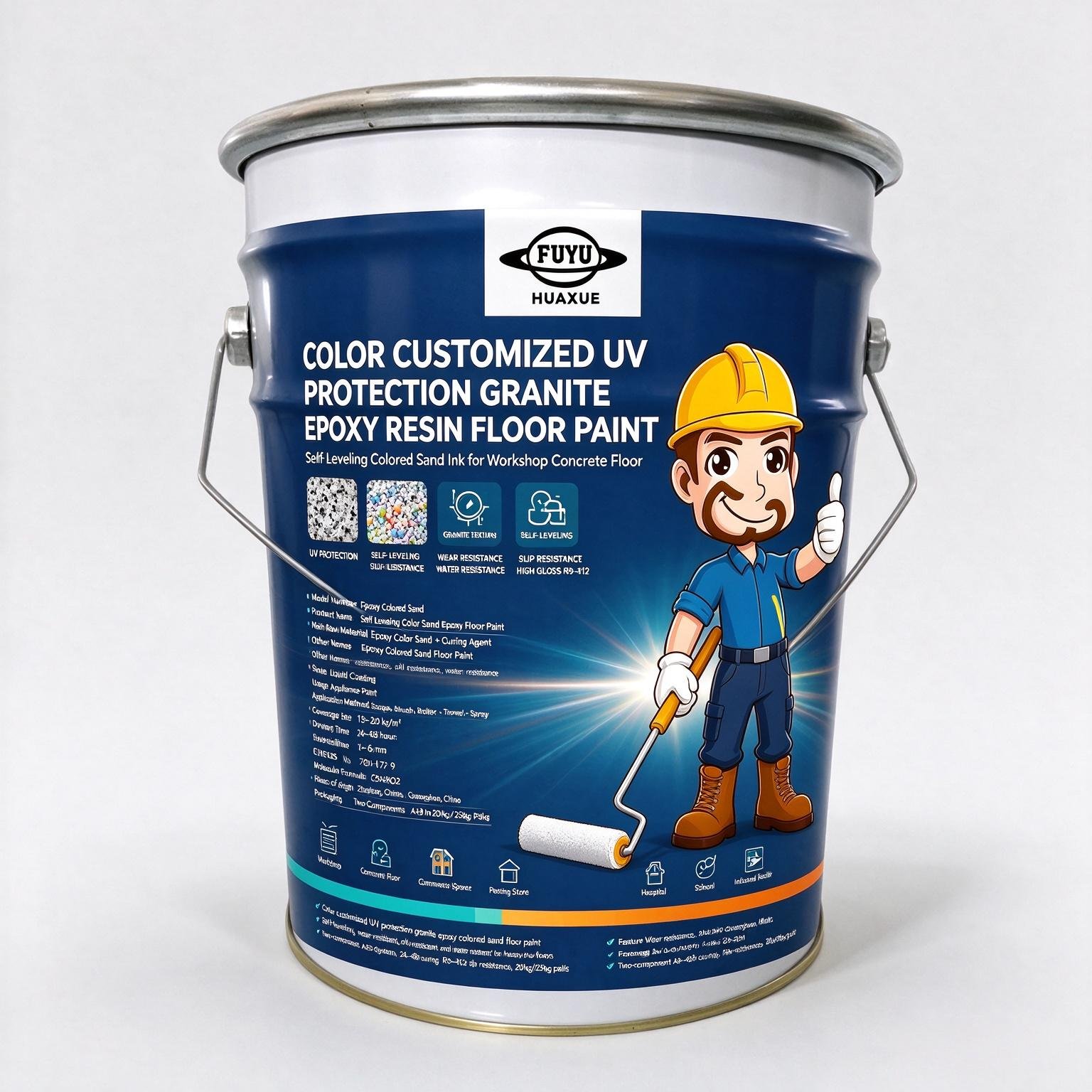
Walk into a newly finished showroom, a modern logistics hub, or a hospital corridor, and the floor is rarely the first thing you notice—until it fails. A coating that sags on a vertical edge, delaminates in sheets six months after installation, or carries an odor that lingers long after the crew has left tells a story no brand wants to tell. The flooring industry is learning that the surface beneath a space is not a backdrop. It is infrastructure, aesthetic statement, and compliance document all at once.
The numbers reflect that shift. The global epoxy flooring market was estimated at USD 4.72 billion in 2026 and is projected to reach USD 7.60 billion by 2033, expanding at a compound annual growth rate of 6.4%. In China alone, the floor coatings market reached RMB 68 billion in 2025, with colored sand self-leveling systems growing 16.8% in shopping mall applications and self-leveling demand rising 18.5% on the back of intelligent manufacturing construction. Growth of that magnitude rarely comes from one driver. It comes from a convergence: spaces that must perform harder, look sharper, and clear regulatory bars that are tightening by the year.
That convergence is where a specific formulation—modified waterborne epoxy colored sand floor paint—becomes more than a product category. It becomes a response to three pressures that project owners, contractors, and specifiers are feeling simultaneously.
The Application Problem Nobody Wants to Talk About
Ask a quality inspector what actually goes wrong with epoxy floors, and the answer is rarely the resin itself. In one audit review of roughly 200 projects annually, an inspector estimated that eight out of ten coating failures trace back to two conditions beneath the surface: moisture in the concrete and improper profile depth. A Cincinnati warehouse case is instructive: a 20,000-square-foot “premium” epoxy system failed within six months, with large sections lifting and curling. The slab’s relative humidity was 85%, well above the 75% maximum for that formulation, and a moisture-mitigation primer had been skipped to save cost. The coating was not defective. The conditions around it were.
This is the quiet argument for formulations that build more intelligence into the material itself. A thixotropic epoxy system, engineered with rheology additives such as BYK-420, changes the application physics. BYK-420 generates thixotropic flow behavior—anti-sagging and anti-settling properties that allow the material to hold its texture and position without impairing leveling. In practical terms, that means a colored sand floor can be scraped or brushed onto vertical transitions, ramps, and irregular substrates with less risk of sagging or migrating before cure. The material resists gravity long enough to do its job, then levels where leveling matters. For crews working against schedule pressure, that is not a minor convenience. It is the difference between a floor that stays where it was placed and one that becomes a callback.
Curing speed compounds the advantage. A full cure in 24 to 48 hours at 23°C and 50% relative humidity is a meaningful compression of downtime in spaces where every closed hour carries a cost—retail floors, workshop bays, hospital wings that cannot afford extended closure. The product specification positions this as a practical improvement over the 72-hour traditional benchmark, without trading away hardness: pencil hardness of 3H to 5H and flexibility in the 1–6 mm range allow the system to absorb minor substrate movement rather than crack under it.
The Regulatory Clock Is Already Running
Aesthetic and application improvements alone would be enough to justify attention. But the environmental bar is moving in a way that changes the calculus for any coating specified for indoor commercial or industrial use.
China’s GB 30981.1-2025 and GB 30981.2-2025, both mandatory national standards for harmful substances in architectural and industrial coatings, take effect on June 1, 2026. They set limits not only on VOC content but also on SVOC, formaldehyde, benzene, toluene, xylene, phthalates, and heavy metals, and they extend regulation to auxiliary materials including curing agents, color pastes, and thinners. The direction is unmistakable: low-VOC and waterborne formulations are moving from premium positioning to baseline expectation. Reports from the Chinese floor coatings market already show water-based environmentally friendly floor coatings growing at 12.8% annually, well ahead of solvent-based products.
A modified waterborne epoxy colored sand system aligns with that trajectory rather than resisting it. Low VOC emissions and low odor matter not only for compliance paperwork but for the practical reality of installing floors in occupied or adjacent spaces—schools during breaks, hospitals with active wings, commercial buildings where tenants cannot be evacuated for a week. When a material can be applied with reduced environmental impact and still deliver wear resistance, oil resistance, and water resistance at a coverage rate of 1.5–2.0 kg/m², the sustainability conversation stops being a compromise and becomes a specification advantage.
Where Performance Meets Design Intent
The third pressure is aesthetic, and it is reshaping how specifiers think about colored sand systems. Decorative epoxy has moved from a niche option to a design tool. Quartz-filled systems blend the organic look of stone with the protective benefits of resin, producing a fine-grain texture and uniform appearance that suits pharmaceutical, laboratory, and commercial food spaces. Colored quartz sand creates a multi-tone, sand-textured surface that reads as intentional design rather than industrial residue. In retail spaces, museums, and airport terminals, decorative patterns are being used to reinforce brand identity or support wayfinding.
This is where the colored sand format separates itself from a generic epoxy coating. The quartz aggregate is not a decorative afterthought sprinkled on top. It is integrated into the film, contributing to slip resistance in the R9–R12 range with custom abrasive additives available for higher-traction zones. Commercial kitchens, locker rooms, workshops, corridors, and wet areas are exactly the environments where a smooth, glossy floor becomes a liability, and where a textured quartz surface delivers traction without sacrificing cleanability. The same floor can shift from high-gloss in a showroom to semi-gloss or matte in a production area, with the aggregate blend customized to the space’s palette and traffic profile.
The design flexibility extends to gloss level, color blend, and surface texture, which means a single product family can serve a shopping mall’s public concourse, a hospital’s back-of-house corridor, and a factory’s forklift aisle without forcing the specifier to assemble a patchwork of unrelated systems. For brand-sensitive environments, that consistency is not cosmetic. It is operational coherence.
What This Means for the People Who Specify, Apply, and Own the Floor
For the contractor, the value proposition is compression of risk. A thixotropic profile reduces the window for sagging and texture loss on complex substrates. Faster cure windows shorten the interval between application and return to service. A formulation that tolerates real-world site conditions—without excusing poor surface preparation—reduces the likelihood that a good product becomes a failed project because of timing, moisture, or geometry.
For the facility owner, the math is lifecycle economics. A floor that resists wear, oil, water, and routine chemical exposure, maintains its texture and appearance, and avoids the removal-and-rework scenario that turned a USD 40,000 installation into nearly USD 50,000 in removal costs and three days of lost production in one documented case is not an expense line. It is an asset with a predictable service life.
For the architect or specifier, the appeal is integration. Colored sand epoxy no longer forces a choice between a surface that performs and a surface that expresses. The quartz aggregate delivers a stone-like depth and texture that reads as deliberate, while the epoxy matrix provides the mechanical backbone—hardness, flexibility, adhesion—that keeps the design intact under traffic.
The Quiet Standard
The flooring market is not short of products. It is short of systems that hold up when the site is imperfect, the schedule is compressed, and the regulatory bar is rising. The modified waterborne epoxy colored sand system is not a silver bullet for every substrate or every project. Concrete moisture still must be measured. Surface preparation still matters. The 24-to-48-hour cure window is a window, not a guarantee against cold ambient temperatures or improper mixing ratios.
But within the realistic constraints of commercial and industrial work, the convergence is compelling: a thixotropic chemistry that resists sag and retains texture, a waterborne profile that moves ahead of VOC compliance rather than chasing it, a quartz aggregate system that delivers slip resistance and design intent in the same film, and a cure schedule that respects the operational cost of downtime. The floor beneath the brand, in other words, is no longer a passive surface. It is a decision that shows—in every edge that holds, every seam that stays closed, and every square meter that still looks intentional years after the ribbon cutting.