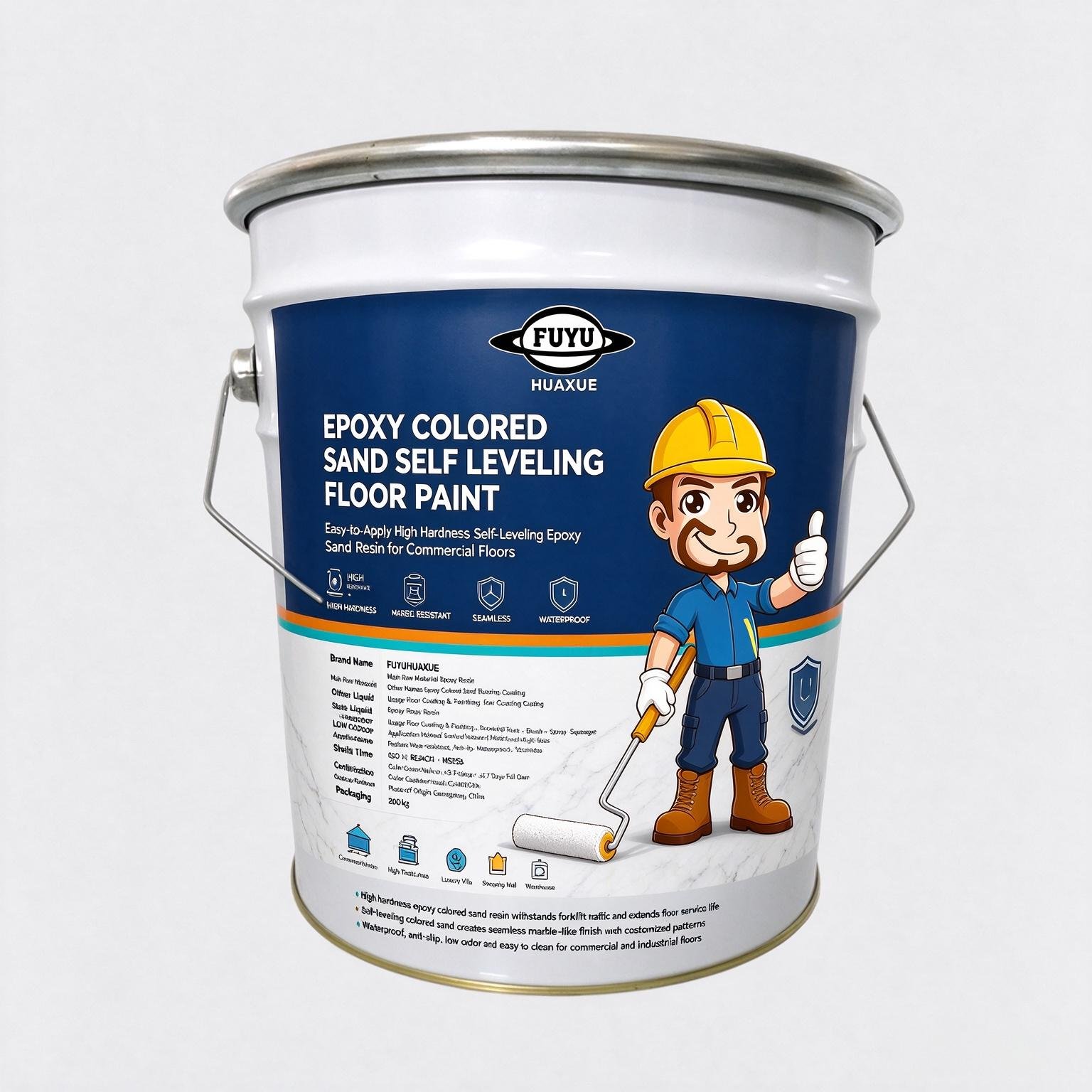
There is a particular kind of silence in a building project that every contractor recognizes. It is the silence that follows a walkthrough of a freshly coated floor where the brush marks have not flowed out, where the surface reads uneven under raking light, and where the owner has begun to ask, quietly, whether the substrate was properly prepared. The floor was supposed to be a finish. Instead, it has become a negotiation.
Epoxy flooring has never suffered from a lack of demand. The global market was estimated at USD 4.72 billion in 2026 and is projected to reach USD 7.60 billion by 2033, expanding at a CAGR of 6.4%, driven by demand across commercial, industrial, and residential sectors for durable, chemical-resistant, and aesthetically capable surfaces. What the market has suffered from is a gap between what epoxy promises and what installation reality delivers. Self-leveling chemistry is the technology that closes that gap, and when it is paired with graded colored quartz sand, the result is a flooring system that resolves three persistent tensions in the industry at once: labor intensity, aesthetic compromise, and long-term maintenance burden.
The Labor Problem Is a Flow Problem
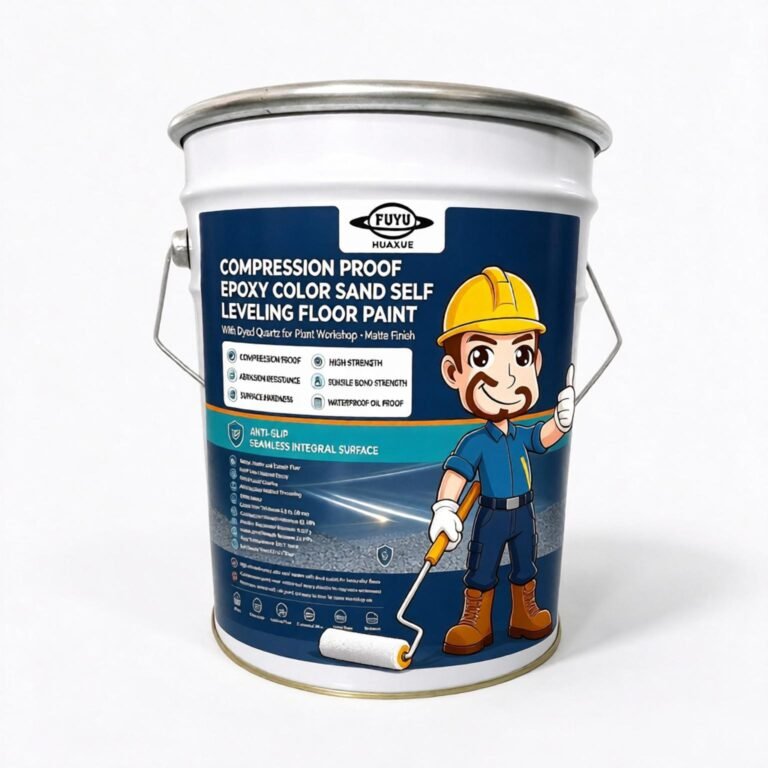
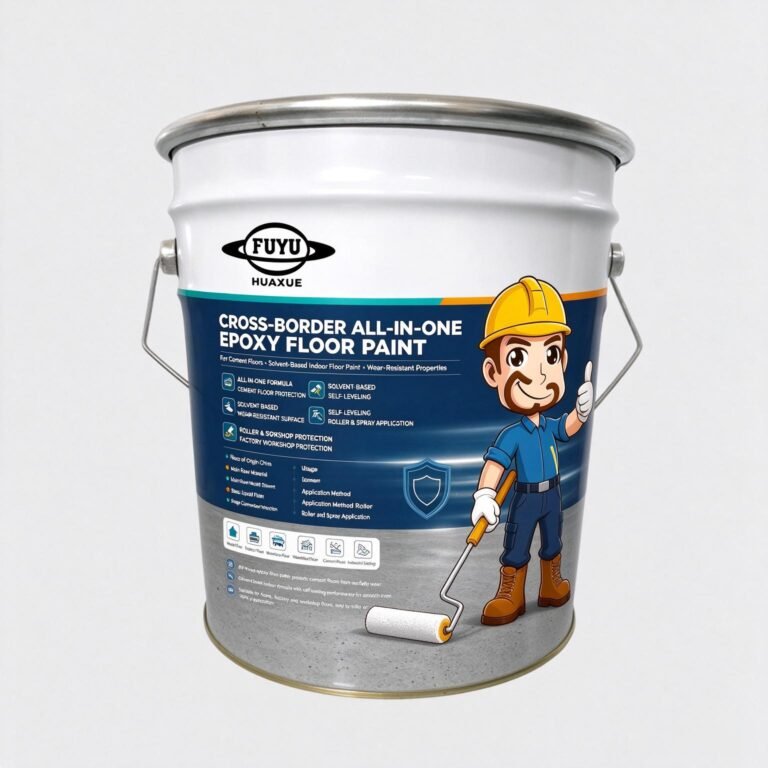
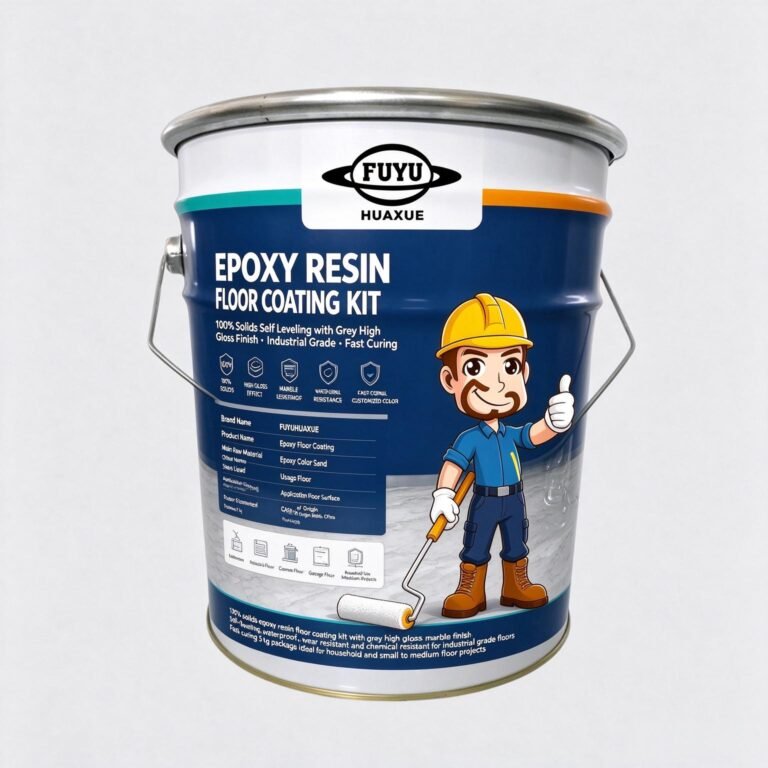
Self-leveling epoxy is not a marketing term. It describes a rheological behavior: the applied material flows under gravity and its own low yield stress, leveling out irregularities and eliminating the trowel and brush marks that would otherwise need mechanical sanding to remove. The chemistry behind it is a curing reaction—typically an amine hardener reacting with epoxy resin—that proceeds without significant shrinkage, locking the leveled surface into place once flow has done its work. In a colored sand system, the quartz aggregate is integrated into this flow, settling into a dense, continuous matrix rather than sitting on the surface as a broadcast that can dislodge under traffic.
The practical consequence is measured in labor hours. Self-leveling application removes the need for complex professional sanding to achieve a seamless surface, and it collapses the skill threshold: a crew that can mix, pour, and distribute evenly can produce a finish that would otherwise depend on the hand of an experienced trowel operator. In cost terms, self-leveling systems reduce labor and management costs by roughly 30% on representative projects compared with manual leveling approaches, and on a 1,000-square-meter floor they can compress the schedule by three to five days. For overseas buyers managing distributed crews, that reduction in procedural complexity is not a convenience. It is a transfer of risk away from the installer and back toward the material, where it belongs.
Walk-on time of 24 hours and full cure within three to seven days completes the operational case. In spaces where closure is expensive—retail floors, workshop bays, logistics hubs—the difference between a floor that is ready tomorrow and one that is ready next week is not a line item. It is the entire justification for the project.
Durability Is Not a Claim. It Is a Specification.
The colored sand format earns its place in industrial and high-traffic environments for a reason that has little to do with appearance. Graded quartz is hard, and when it is densely packed into an epoxy matrix, the composite surface resists the two failure modes that degrade ordinary coatings: abrasion and impact. The specification positions the system for frequent forklift and heavy-vehicle traffic without powdering or peeling, with a service-life extension of more than 30% relative to ordinary floors. That figure is not an abstraction. In manufacturing areas exposed to heavy foot and wheel traffic, colored quartz epoxy systems are selected precisely because mechanical resistance and chemical resistance are non-negotiable, and because the surface must remain cleanable under conditions that would stain or erode a thinner film.
The seamless, non-porous character of the cured film does additional work. A floor without joints or seams offers no purchase for oil, water, or mild acids and alkalis to penetrate and no grout lines to harbor residue. Stains wipe away rather than soaking in, which reduces the maintenance burden over the life of the floor rather than merely at the point of installation. For facilities where hygiene and cleanability are operational requirements—food-adjacent spaces, pharmaceutical corridors, hospital back-of-house—that impermeability is a functional property, not a selling point.
There is a technical subtlety worth noting. Waterborne self-leveling epoxy systems based on emulsion curing agents can be formulated to be permeable to water vapor while remaining impermeable to liquid water, which allows residual moisture in the concrete substrate to escape without causing the osmotic blistering that plagues conventional solvent-free epoxy coatings. That does not excuse poor moisture testing or inadequate surface preparation, but it does widen the window of substrates on which a self-leveling system can perform reliably—a meaningful advantage for renovation work where the slab’s history is imperfectly known.
The Aesthetic Case Is Stronger Than It Looks
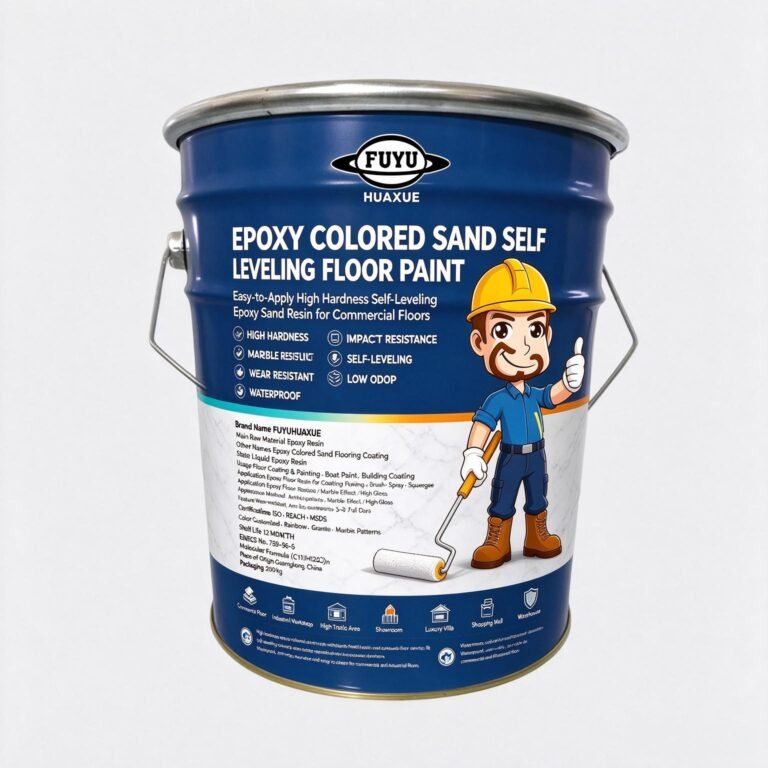
Decorative epoxy has spent years fighting a credibility problem: it has been seen as a functional surface dressed up, rather than a genuine design material. The colored sand self-leveling format changes that calculation because the aesthetic is a direct product of the performance structure. The natural stacking of graded quartz, distributed through a self-leveling film, produces a depth and variation that reads as stone rather than as paint. Marble-like and granite-like effects emerge from the aggregate blend and flow behavior, not from a printed overlay that wears away under traffic.
The design market has moved in the same direction. Decorative quartz aggregate systems with granite-like aesthetics and R11 slip ratings are being specified for showrooms, premium retail, and luxury residential entries, where durability and visual impact are expected to coexist rather than trade off. Marble-effect self-leveling epoxy has become a reference point for hotel lobbies, villas, and high-end commercial floors, valued not only for its appearance but for the fact that the seamless surface eliminates the grout lines that interrupt a stone-look floor. The color palette can be customized across rainbow, granite, and marble patterns, and the same product family can shift from high-gloss in a showroom to a more subdued sheen in a production area without changing systems.
For the specifier, the implication is that a single material logic can serve a building‘s public face and its back-of-house. That coherence is operationally useful. It reduces the number of products a facility manager must stock, the number of application procedures a contractor must master, and the number of warranty interfaces that can fail when one system meets another at a doorway.
The Regulatory Clock Favors Waterborne, Low-Odor Systems
No serious discussion of floor coatings in 2026 can ignore the direction of environmental regulation. China’s mandatory national standard GB 30981.1-2025, which took effect on June 1, 2026, replaces earlier standards for interior floor coatings and sets limits not only on VOC content but on SVOC, formaldehyde, benzene, and other harmful substances, with a classification structure that explicitly distinguishes water-borne, solvent-borne, and solvent-free floor coatings. The regulatory trajectory is toward tighter limits and broader scope, and waterborne formulations are positioned on the right side of that trajectory.
A low-odor, low-VOC self-leveling colored sand system matters beyond compliance paperwork. Floor installation frequently happens in occupied or partially occupied buildings—schools during holidays, hospitals with active wings, commercial spaces where adjacent tenants cannot be displaced. A material that can be applied with minimal environmental impact and brought into service quickly reduces the coordination burden on the project team. When that same material delivers wear resistance, anti-slip texture, and a seamless surface, the sustainability conversation stops being a constraint and becomes a specification advantage. The product’s alignment with REACH and VOC-oriented standards is not an isolated credential. It is a signal that the formulation has been designed for the regulatory environment the market is entering, not the one it is leaving.
The Anti-Slip Detail That Quietly Matters
One of the least discussed advantages of colored sand systems is also one of the most consequential in real buildings. A smooth, glossy epoxy floor becomes hazardous when wet. The colored quartz structure provides a natural micro-texture that delivers traction without the aggressive, difficult-to-clean profile of a heavy broadcast. In commercial kitchens, locker rooms, workshops, corridors, and wet-process areas, that distinction is the difference between a floor that meets slip-resistance expectations and one that becomes a liability claim waiting to happen. The texture is integral to the film rather than applied on top, which means it does not wear away preferentially in the traffic lanes where traction is most needed.
What the Floor Is Worth Over Time
The case for self-leveling colored sand epoxy is not that it is the cheapest floor per square meter at the moment of purchase. It is that the cost of a floor is not the cost of the coating. It is the cost of application labor, the cost of downtime, the cost of maintenance, and the cost of premature replacement—all discounted over a service life that, in a properly specified and installed system, is measured in years rather than seasons.
A product that levels itself reduces the labor line. A product that resists abrasion and impact extends the replacement interval. A product that wipes clean reduces the maintenance line. A product that meets the incoming environmental standard avoids the risk of a specification that becomes non-compliant before the floor is even due for renewal. And a product that produces a marble-like, seamless surface gives the owner something that functional floors rarely provide: a surface that does not need to be explained away.
The flooring industry does not need another coating. It needs systems that behave predictably when the site is imperfect, the crew is average, the schedule is short, and the regulatory bar is rising. Self-leveling colored sand epoxy is not a universal answer, and no responsible supplier would present it as one. Concrete moisture must be assessed. Surface preparation must be done. Mixing ratios and ambient conditions still govern the outcome. But within those constraints, the convergence is clear: a chemistry that flows where it should and holds where it must, an aggregate that wears without failing, a surface that reads as designed rather than merely applied, and a formulation that moves with the environmental standard instead of against it. The floor, finally, finishes the project rather than complicating it.